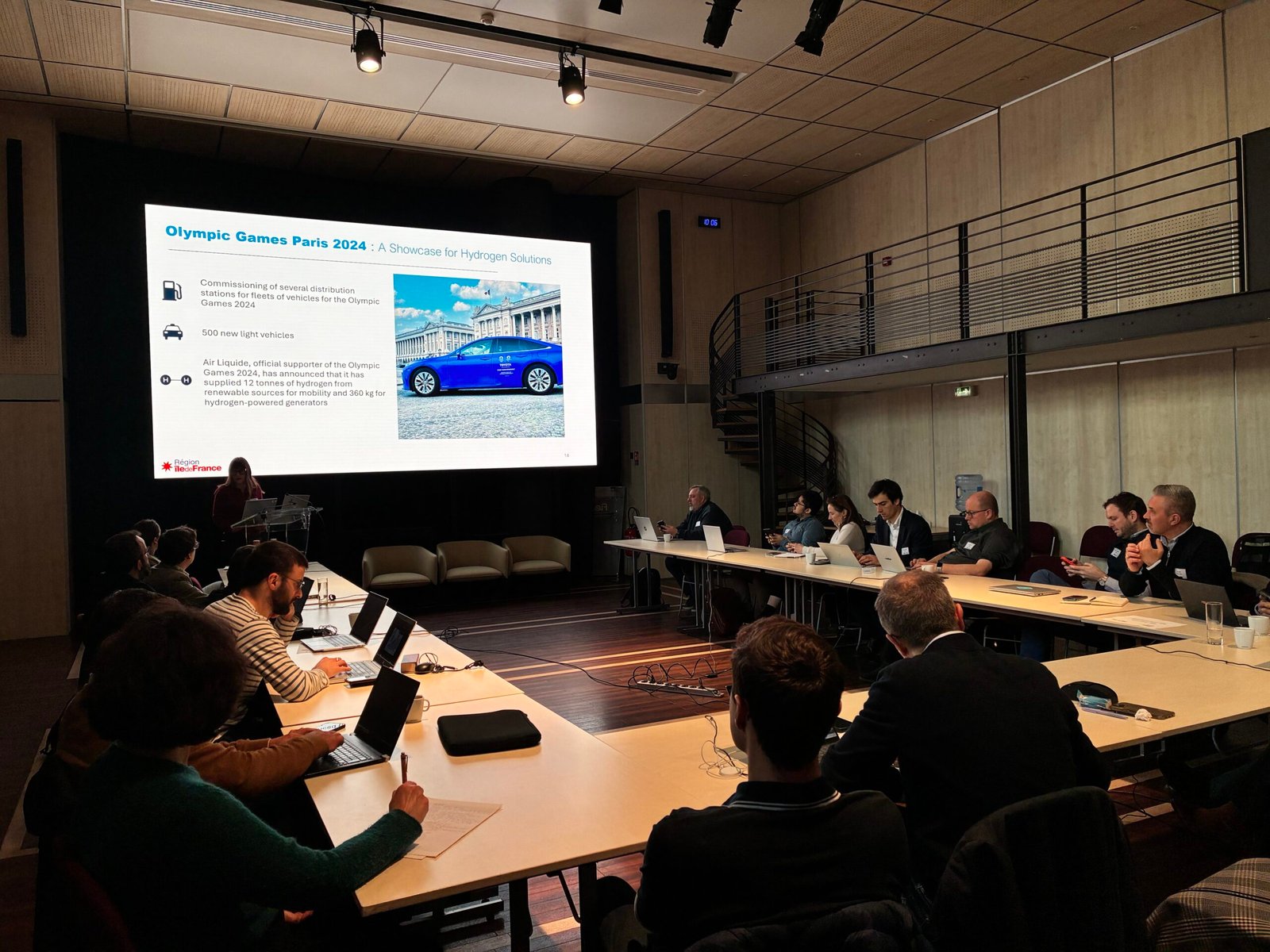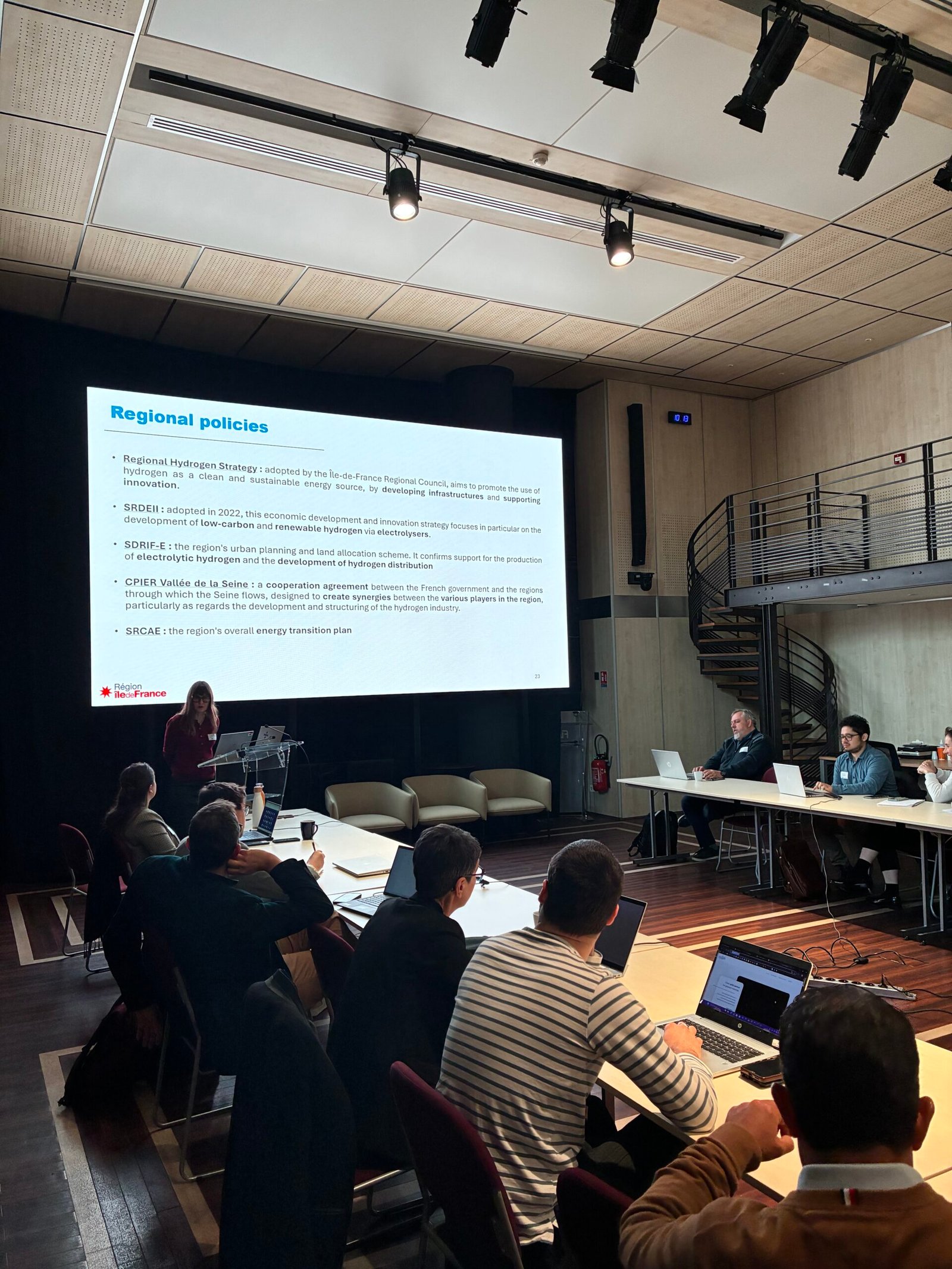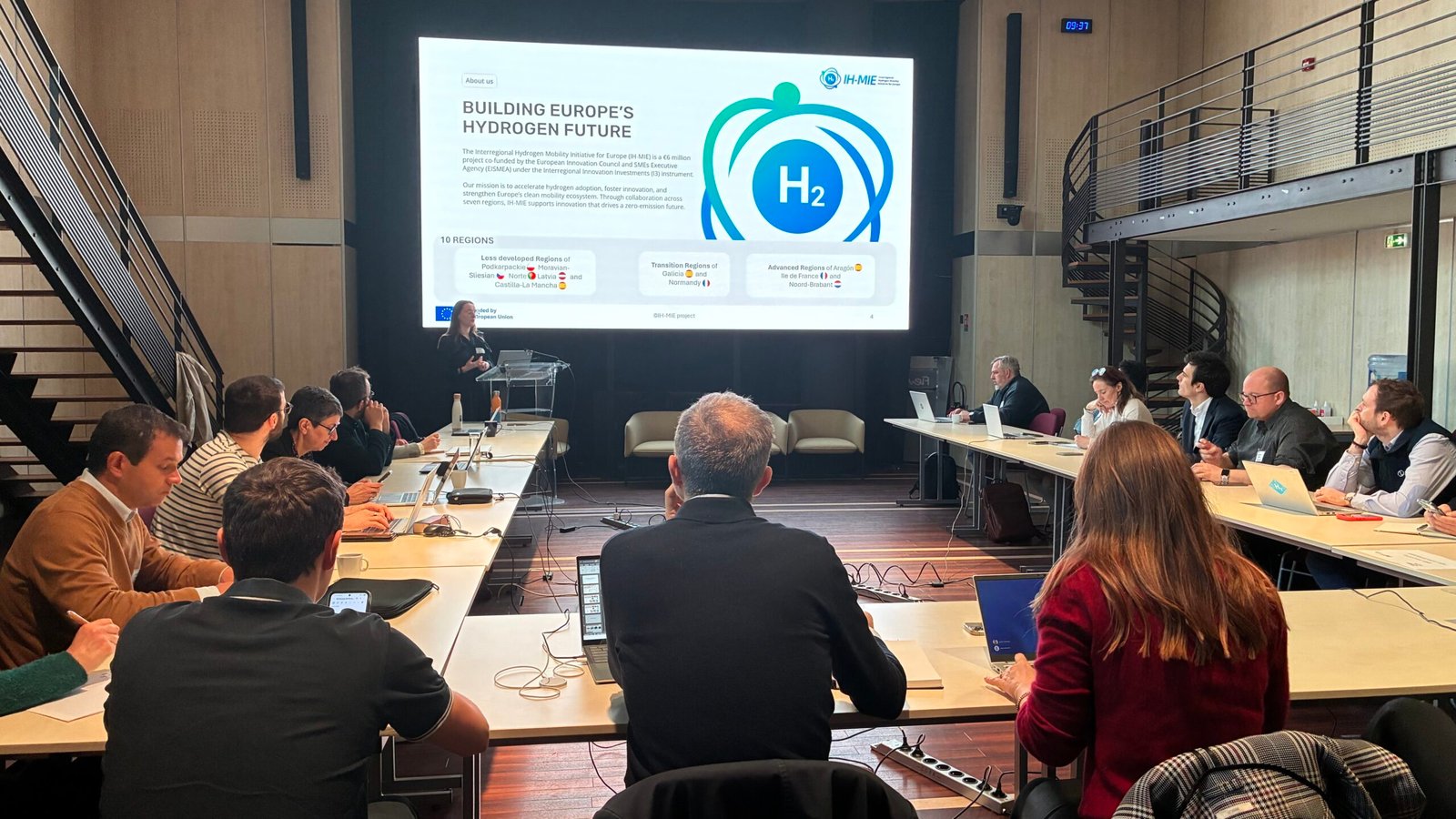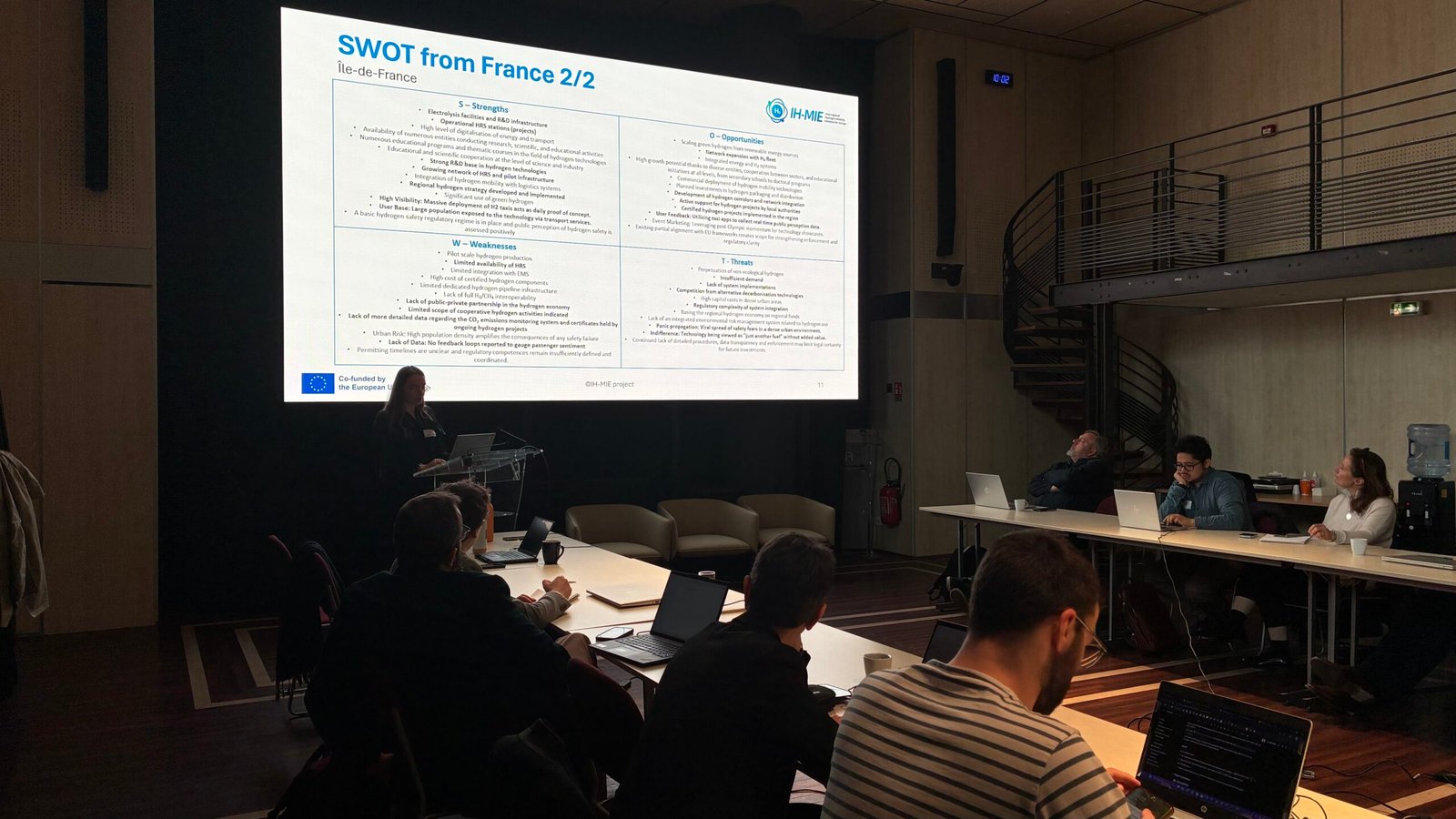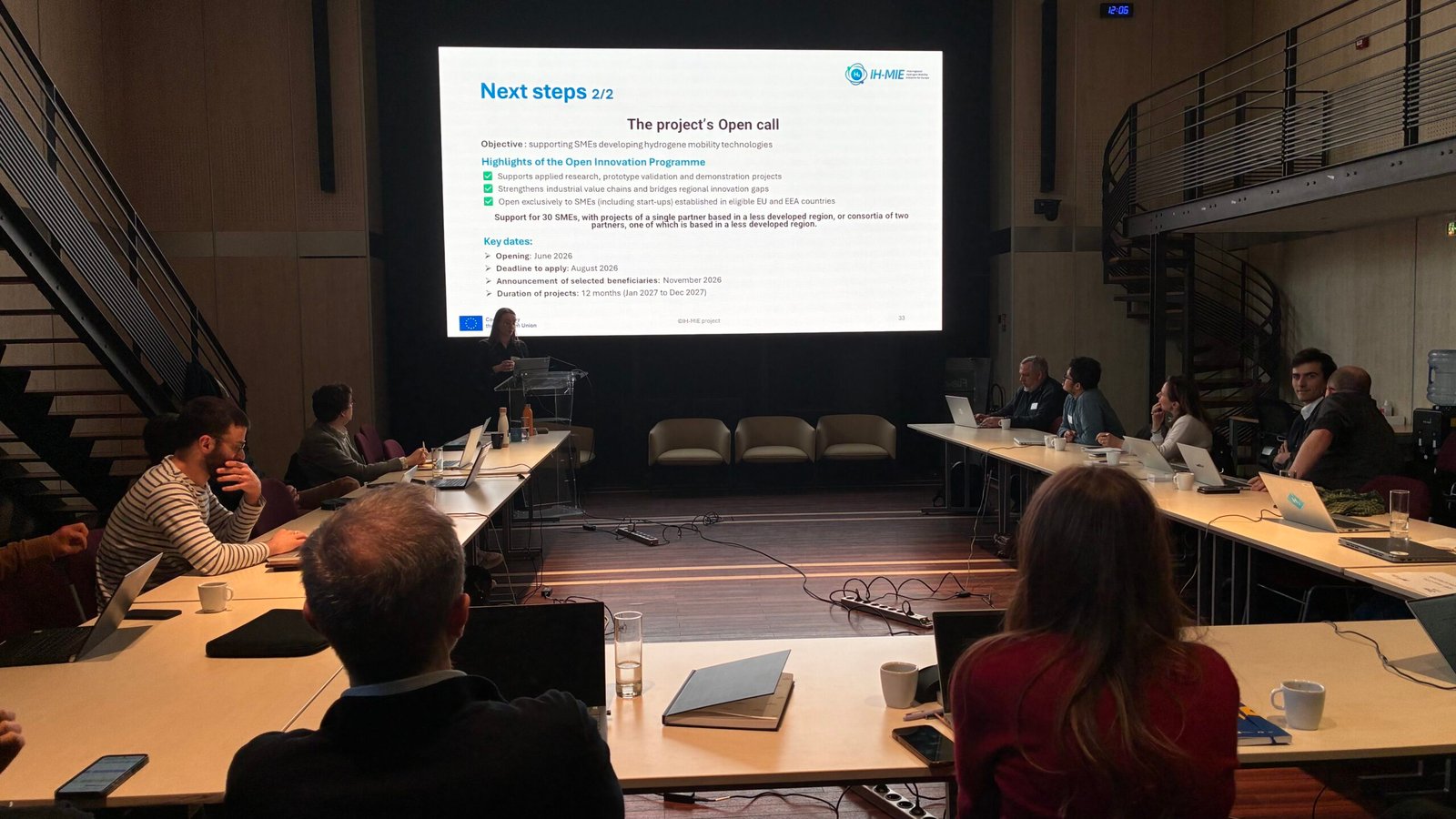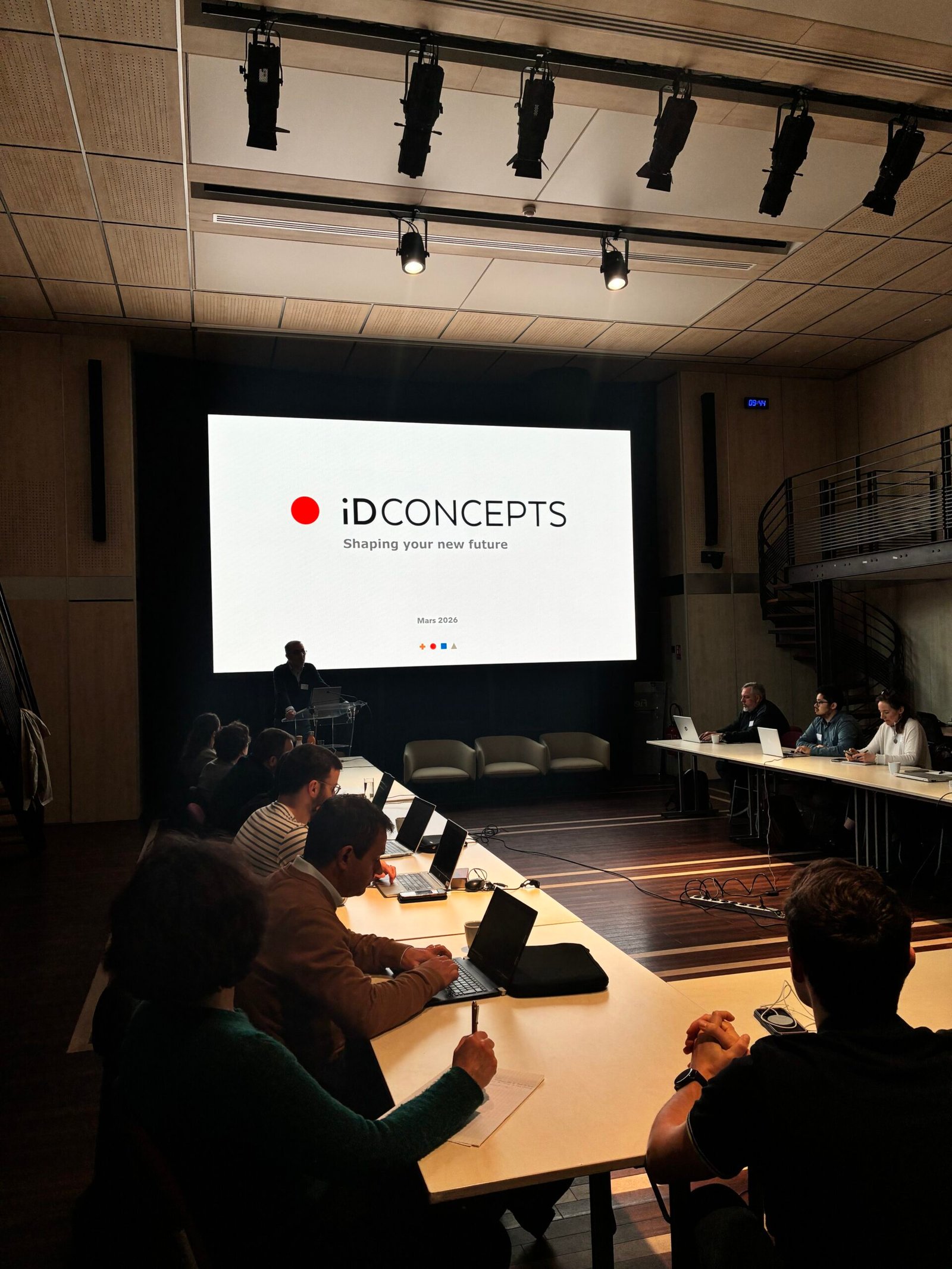
This month, on 𝟑 𝐌𝐚𝐫𝐜𝐡 𝟐𝟎𝟐𝟔, NextMove hosted the 𝐈𝐇-𝐌𝐈𝐄 Regional Workshop in Paris, bringing together key stakeholders from industry, research, and public institutions across Normandy and Île-de-France to advance hydrogen mobility discussions.
The workshop gathered over 20 participants, including representatives from public authorities, academia, SMEs, industrial leaders, and cluster organizations, creating a strong platform for collaborative dialogue and knowledge exchange.
During the session, participants explored the regional hydrogen mobility ecosystem through structured discussions, focusing on:
• Fragmentation across the hydrogen value chain and lack of interoperability
• Low utilisation of hydrogen refuelling infrastructure (HRS) and limited market demand
• High total cost of ownership and uncertainty around hydrogen pricing
• Technological challenges, including fuel cell performance, storage, and supply chain complexity
• Policy and regulatory gaps, including unclear long-term strategies and insufficient incentives
• Limited public awareness and social acceptance of hydrogen technologies
A central conclusion emerged: the hydrogen mobility ecosystem is currently facing a classic “𝐜𝐡𝐢𝐜𝐤𝐞𝐧-𝐚𝐧𝐝-𝐞𝐠𝐠” dilemma — infrastructure is underused due to low demand, while demand remains limited due to high costs and insufficient infrastructure.
Breaking this cycle will require a coordinated ecosystem approach, combining infrastructure deployment, targeted incentives, and stronger alignment between public and private stakeholders.
The workshop also highlighted the complementary roles of the regions: Normandy as an industrial production hub and Île-de-France as a key application and demand center, forming a strategic hydrogen corridor in Europe.
Building on these insights, the upcoming interregional online roundtable on 𝟐𝟒 𝐀𝐩𝐫𝐢𝐥 𝟐𝟎𝟐𝟔 will focus on aligning regional challenges, identifying synergies, and strengthening cooperation ahead of the demonstration phase.
Cofunded by the European Union. Views and opinions expressed are those of the author(s) only and do not necessarily reflect those of the European Union or the European Innovation Council and SMEs Executive Agency (EISMEA). Neither the European Union nor the granting authority can be held responsible for them.
Implemented within the Interregional Innovation Investments (I3) Instrument project “IH-MIE – Interregional Hydrogen Mobility Initiative for Europe” (Grant Agreement No. 101228317).